
Israel strikes Lebanon as Netanyahu rejects Iran ceasefire scope
Confidence: HIGH (87/100) | April 08, 2026 |
 thenationalnews.com
In one sentence: Israel struck southern Lebanon on April 8 hours after a US-Iran ceasefire took effect, with Netanyahu insisting the truce explicitly excludes Lebanon despite Pakistan's mediators saying otherwise.
Why it matters: The US-Iran truce removed the direct superpower confrontation from the board but left Israel's ground invasion of Lebanon fully operative, creating a split ceasefire that neither Hezbollah nor Lebanon's government has formally accepted. The contradiction between Netanyahu's exclusion of Lebanon and Pakistan's claim that the truce covers "everywhere including Lebanon" threatens to unravel a fragile deal within hours of its announcement. With one-fifth of Lebanon's population already displaced and Islamabad peace talks scheduled for Friday, Israel's continued strikes are the single biggest test of whether the ceasefire holds.
What Happened Today
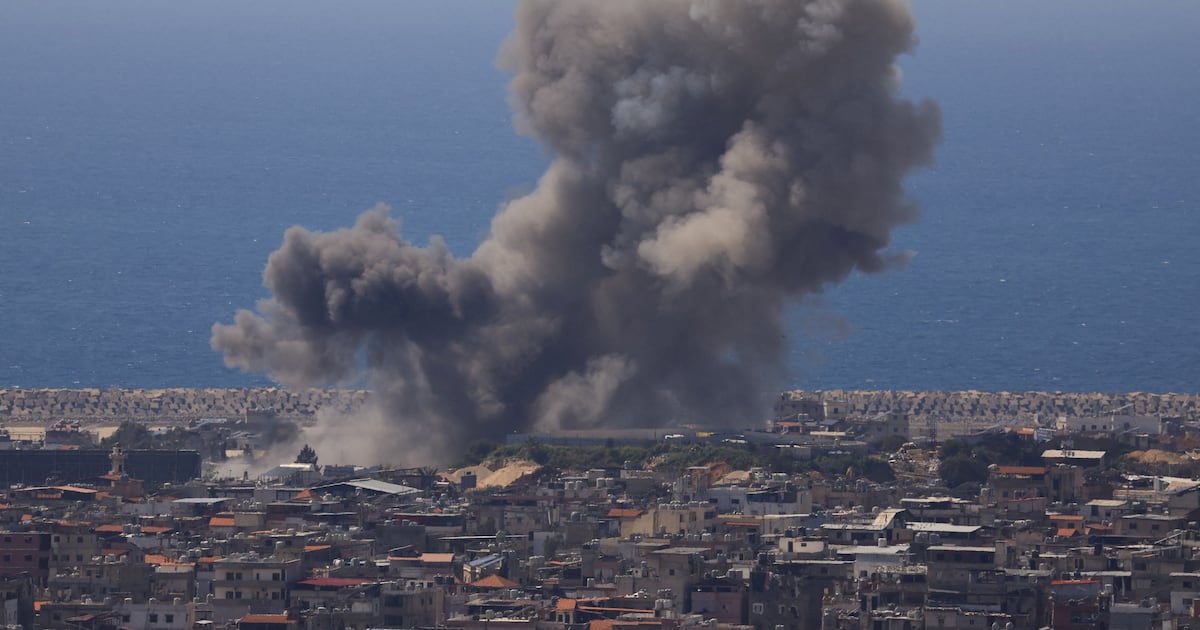
- Israel renewed air strikes and evacuation orders across southern Lebanon on April 8, the morning after a US-Iran ceasefire took effect, with the Israeli army issuing a new forced evacuation order for a zone more than 40 kilometres inside Lebanon and striking a building near the southern city of Tyre, Lebanon's National News Agency and The National reported.
- Prime Minister Benjamin Netanyahu stated explicitly that 'the two-week ceasefire does not include Lebanon,' saying Israel would continue its ground and air campaign against Hezbollah; his office added that conditions of the Iran truce — including opening the Strait of Hormuz and halting attacks on the US, Israel and regional countries — did not bind Israel's Lebanon operations, according to The National and NPR.
- Pakistan's Prime Minister Shehbaz Sharif, who brokered the US-Iran deal, directly contradicted Netanyahu, stating the ceasefire applies 'everywhere including Lebanon'; Iran's position similarly holds the truce encompasses 'all fronts,' creating a sharp three-way dispute over the deal's geographic scope, per NPR and Axios.
- Shortly before the ceasefire announcement, an Israeli strike on the southern Lebanese city of Sidon killed eight people, according to the Deccan Chronicle citing AFP; Lebanon's Lebanese Civil Defence and health ministry reported further casualties across southern towns on April 8.
- Hezbollah urged its supporters not to return to southern Lebanon, the Bekaa Valley or Beirut's southern suburbs, describing those areas as still 'targeted' and calling for patience until an official ceasefire is announced, while Lebanese President Joseph Aoun said the state was working to ensure any regional peace 'includes Lebanon,' per The National.
Contested Claims
- Pakistani Prime Minister Shehbaz Sharif (mediator), confirmed by NPR and Axios: The US-Iran ceasefire applies everywhere, including Lebanon and Israeli attacks there. Israeli Prime Minister Benjamin Netanyahu's office, confirmed by The National, CBS News, NBC News: The two-week ceasefire does not include Lebanon; Israel's campaign against Hezbollah continues.
- Iran's Supreme National Security Council statement, cited by The National: Iran's Supreme National Security Council says the ceasefire covers its support for 'the Islamic resistance in Lebanon,' implying a halt to backing Hezbollah operations. Deccan Chronicle (AFP) and The National: Hezbollah has not claimed any operations since 1am April 8 (2200 GMT April 7) but has not announced a formal ceasefire and tells supporters the south remains 'targeted.'
Unverified / Single Source
- (Unverified — single source; Al Jazeera noted it could not verify the claim and Israel made no comment) Hezbollah fired a cruise missile at an Israeli warship 126km off the Lebanese coast on April 6. [Hezbollah statement, cited by Al Jazeera]
- (Unverified — single national source; not independently corroborated at time of reporting) Iranian drones caused 'significant material damage' to Kuwait's oil facilities, power stations and water desalination plants on April 8 despite the ceasefire. [Kuwait's army statement, cited by CNN]
Key Figures
| Metric | Value | Source |
|---|---|---|
| People killed in Lebanon since Israeli bombardment began March 2 | More than 1,530, including 130 children | Lebanon Ministry of Public Health, cited by CNN |
| People displaced in Lebanon since March 2 | More than 1.2 million (~22% of Lebanon's population) | UN data cited by Al Jazeera; Lebanese authorities cited by Reuters/AFP |
| Israeli attacks on Lebanon (March 2 – March 27) | More than 1,840 attacks (1,486 air/drone; 318 shelling/artillery/missile) | ACLED independent monitor, cited by Al Jazeera |
| International oil price benchmark change after ceasefire announcement | Down 13% as of Tuesday night | CBS News |
| Total killed across Middle East conflict since war began | More than 3,400 | NBC News |
Frequently Asked Questions
Does the US-Iran ceasefire include the Israel-Lebanon war? Israel says no. Prime Minister Netanyahu declared explicitly that 'the two-week ceasefire does not include Lebanon' and Israeli strikes continued on April 8. Pakistan's mediator and Iran both claim the truce covers Lebanon, creating an unresolved contradiction at the heart of the deal.
How many people have been killed and displaced in Lebanon? Lebanon's Ministry of Public Health reported more than 1,530 people killed, including 130 children, and over 4,400 wounded since Israel's bombardment began March 2. UN data shows more than 1.2 million people — roughly 22 percent of Lebanon's entire population — have been displaced.
What happens next with the US-Iran ceasefire and Lebanon? US-Iran peace talks are scheduled for Friday, April 10, in Islamabad, with Vice President Vance expected to lead the US delegation. Lebanon's President Aoun is pressing for any deal to include Lebanon. Hezbollah has not formally agreed to a ceasefire, and Israel says its ground operation continues indefinitely.
Background
Israel launched airstrikes and a ground invasion of Lebanon on March 2, 2026, after Hezbollah began firing rockets into Israel in retaliation for a US-Israeli strike that killed Iran's Supreme Leader Ayatollah Ali Khamenei on February 28. The new war opened a Lebanese front concurrent with a six-week US-Israeli bombing campaign against Iran. A US-Iran ceasefire brokered by Pakistan took effect April 8, but Israel immediately declared the truce does not cover its operations in Lebanon, where Israeli forces have pushed more than 40 kilometres inside the country.
Sources
- thenationalnews.com — thenationalnews.com (unknown date)
- npr.org — npr.org (unknown date)
- aljazeera.com — aljazeera.com (unknown date)
- edition.cnn.com — edition.cnn.com (unknown date)
- nbcnews.com — nbcnews.com (unknown date)
- deccanchronicle.com — deccanchronicle.com (unknown date)
- axios.com — axios.com (unknown date)
- cbsnews.com — cbsnews.com (unknown date)
